Team Kentucky advances research on pediatric cancer, builds support for impacted families
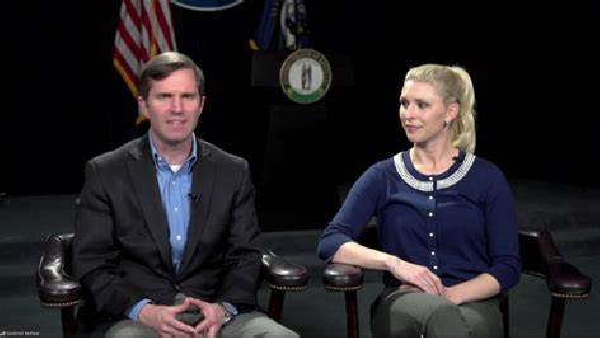
During Childhood Cancer Awareness Month, Gov. Andy Beshear and First Lady Britainy Beshear are recognizing the commonwealth’s leading role in the fight against this illness, the leading cause of death by disease for American children. During Gov. Beshear’s administration, the state has invested $45.5 million in innovative research projects from Kentucky scientists, as well as financial and psychosocial support for families with children in treatment.
“Every kid deserves the chance to grow up. And no parent should ever have to choose between buying the food their child needs to eat or the medicine they need to survive,” Gov. Beshear said. “While the federal government has cut funding for medical research and healthcare coverage, Team Kentucky has stepped up, providing more than $45 million in state funding during my administration for pediatric cancer research and support for families going through this.”
Since its founding in 2015, the Kentucky Pediatric Cancer Research Trust Fund (KPCRTF) has sponsored 62 childhood cancer research projects, led by investigators at the University of Louisville and the University of Kentucky. Scientists supported by the KPCRTF are looking for new ways to use a child’s own immune system to fight childhood brain tumors like Diffuse Intrinsic Pontine Glioma (DIPG) and medulloblastoma, exploring inherited genes that increase the risk of childhood cancer, developing a central database to study pediatric cancer, recruiting talented new researchers to Kentucky and more.
One research group supported by the KPCRTF submitted a provisional patent application for a novel cancer drug, especially pertinent to pediatric brain cancer. Among KPCRTF projects, multiple new drugs or pre-drugs have been identified or are under development. Scientists are also developing technology to help safely store cancer cells at room temperature. One-third of the research grants were able to use their findings to leverage more funds.
In addition to funding research, Team Kentucky is addressing barriers to treatment and reducing medical debt, the leading cause of bankruptcy for American families. Last week, Gov. Beshear took action to relieve $250 million in medical debt for more than 130,000 Kentuckians. In May 2025 and November 2025, the KPCRTF also awarded nearly $4 million to seven trusted nonprofits and medical centers providing social, emotional and financial support for families facing childhood cancer.
“Families affected by childhood cancer deserve enhanced treatment and answers that research can provide, as well as quality healthcare coverage and financial and personal support to help navigate the unimaginable,” said Mrs. Beshear. “Andy and I are committed to being there for these brave children and their families and to do that, it’s important we work to understand their unique needs and deliver resources that help. This is about showing love and being there for our neighbors.”
Kim Clements, whose teenage daughter, Kaitlyn, was diagnosed with leukemia last year, highlighted the impact of Kentucky’s investments in research, patient care and family support: “The nurses at Norton were true angels on Earth, providing such great care during the scariest time of our lives. The child life specialist, art therapist, music therapist and massage therapist became integral figures during Kaitlyn’s hospital stay. Our family had the opportunity to go to the Cancer Resource Center together so Kaitlyn could select a wig and head coverings. When we spent Thanksgiving and the first half of the Christmas season in the hospital, we were supported with meals and activities from Kids Cancer Alliance and Gilda’s Club.”
On Sept. 1, the Governor and First Lady lit the Governor’s Mansion gold in honor of Childhood Cancer Awareness Month, and on Sept. 10, Lt. Gov. Jacqueline Coleman presented the administration’s proclamation to families at Norton Children’s Hospital.
Select KPCRTF Research Project Summaries
- CAR-T cells (chimeric antigen receptor T cells) are immune cells taken from a cancer patient’s own body and engineered to fight their cancer. Scientists at Norton Children’s Hospital at the University of Louisville are researching ways to make CAR-T cells that will combat certain childhood brain tumors, such as DIPG, that currently have no cure.
- “Project Inherited Cancer Risk” is a clinical program run out of Golisano Children’s Hospital at the University of Kentucky that offers testing to any patient who has had a childhood cancer to see if they have an inherited increased risk of cancer. Since 2021, more than 350 patients have received testing. If a patient is found to have a genetic cancer syndrome, their family is referred to specialists at Golisano and Norton Children’s Hospitals for personalized care and further genetic counseling.
- The ACCELERATE Consortium, housed in the University of Kentucky, was created in 2022 to bring together cancer centers in Kentucky, West Virginia and Pennsylvania that care for children with cancer and to develop a central database that can be used to study pediatric cancer. Sharing information across hospitals allows researchers to learn from more patients and make progress faster. ACCELERATE securely combines information about patients’ diagnoses, treatments, outcomes and tumor testing while protecting their identities, giving researchers a unique resource for studying cancer in young people across Kentucky and Appalachia. ACCELERATE encourages collaborative studies aimed at improving care and outcomes for children within the commonwealth.
- A patient’s immune system can protect his or her body from cancer by recognizing tumor cells and killing them, but sometimes the cancer finds ways to hide itself from the immune system. Researchers at University of Louisville are investigating how this happens in certain malignant brain tumors, including medulloblastoma. Their work delves into new therapies which can be designed to “wake up” the immune system to kill the cancer once again. Interleukin-8 (IL-8) is now recognized as an important protein secreted by brain cancer that lets it hide from the immune system. One of the major ways IL-8 allows brain tumors to escape the body’s immune system is by attracting cells called “myeloid-derived suppressor cells” (MDSCs) which turn off the normal immune response to cancer. Interrupting this process by targeting either IL-8 or the MDSCs could lead to new and effective therapies against pediatric brain tumors.
Family Support Grant Impact
- Since opening in January, the Norton Children’s Cancer Institute Resource Center has served 445 patients and family members from more than 130 ZIP codes in Kentucky and neighboring states. The center offers a wide range of support services in one location, including financial navigators, nurse navigators, educational liaisons, mental health specialists and expressive arts therapists. The center was supported with more than $1.4 million from the KPCRTF.
- The University of Kentucky (UK) Markey Cancer Foundation used $1 million in KPCRTF grants to create the Care Advancing Treatment Succession (CATS) Financial Assistance Fund for pediatric cancer patients and their families.
- Kids Cancer Alliance (KCA) has provided essential financial support to 58 childhood cancer patients and their families, helping cover daily living costs while they undergo treatment in the commonwealth. The program also provided compassionate support for 11 families by covering memorial and burial expenses for children lost to cancer. KCA received $660,000 from the KPCRTF to support these ongoing initiatives.
- With $353,000 in grant funding from the KPCRTF, Gilda’s Club Kentuckiana has expanded its Pediatric Financial Assistance Program and increased services to pediatric patients and their families across the commonwealth by more than 1,000%. Gilda’s Club offers comprehensive psychosocial support programs in four regional locations.
- Book for Hope has used $220,000 in KPCRTF grant funding to support 70 Kentucky families with a child in cancer treatment by providing critical household bill assistance, emergency home and vehicle repairs, grocery and transportation costs and funeral expenses so grieving families did not have to take on debt to bury their child.
- Super Drew’s Crew has helped over 100 families with over $51,000 in direct financial assistance, supporting rent and mortgage payments, utility payments and funeral costs when needed, so families are not displaced during a child’s treatment and can focus on direct medical costs.
- Since launching Seth’s Squad Pantry at Norton Children’s Cancer Institute in July 2025, the organization has provided more than 35,000 servings of food and nearly 20,000 additional essential supplies to pediatric cancer patients and their families. These projects were supported in part by $41,800 from the KPCRTF.
 Holding Big Pharma accountable, Indiana AG calls on Hoosiers to claim compensation for inflated generic drug prices
 Ohio Man Found Guilty of Murder and Obstruction of Justice Following Jury Trial
 All-way stop coming to U.S. 421 at 3rd Street in Downtown Madison